Standing water in the sump, dishes that come out gritty, a machine that hums and refuses — dishwasher complaints sound vague and diagnose precisely. From $238 for the exam and all treatment labor.
The dishwasher is the most self-sacrificing machine in the kitchen: it eats what the plates bring — seeds, labels, toothpicks, the occasional shard of a wine glass — and its most common diseases are simply that diet catching up with it. A remarkable share of the dishwasher complaints that reach the Wendell Ave practice end at the sump: the filter assembly and chopper cleared of debris, the drain loop checked, and a machine everyone had written off running its next cycle like a young one. Those visits close at the from-price with the parts line still blank.
When the fault is genuinely mechanical, the differential stays orderly. Drain pumps and wash pumps announce themselves differently under load; inlet valves weep or stick; float switches lie; door latches and their microswitches gate everything the way a dryer's door switch does. Heating elements fail the drying stage long before anyone suspects them, and control boards — the expensive suspect — get accused last, after measurement, never first. The exam walks the chain in probability order because the links differ in price tenfold.
South Kitsap adds its usual footnotes. Hard well water east and south of town scales spray arms and valves into early old age, so the water question opens every rural dishwasher chart. And the air-gap-and-loop plumbing under local sinks — installed by three generations of different hands — causes a steady trickle of 'dishwasher' complaints that are really drain complaints; when the finding belongs to the plumbing rather than the appliance, the chart says so honestly and refers accordingly.
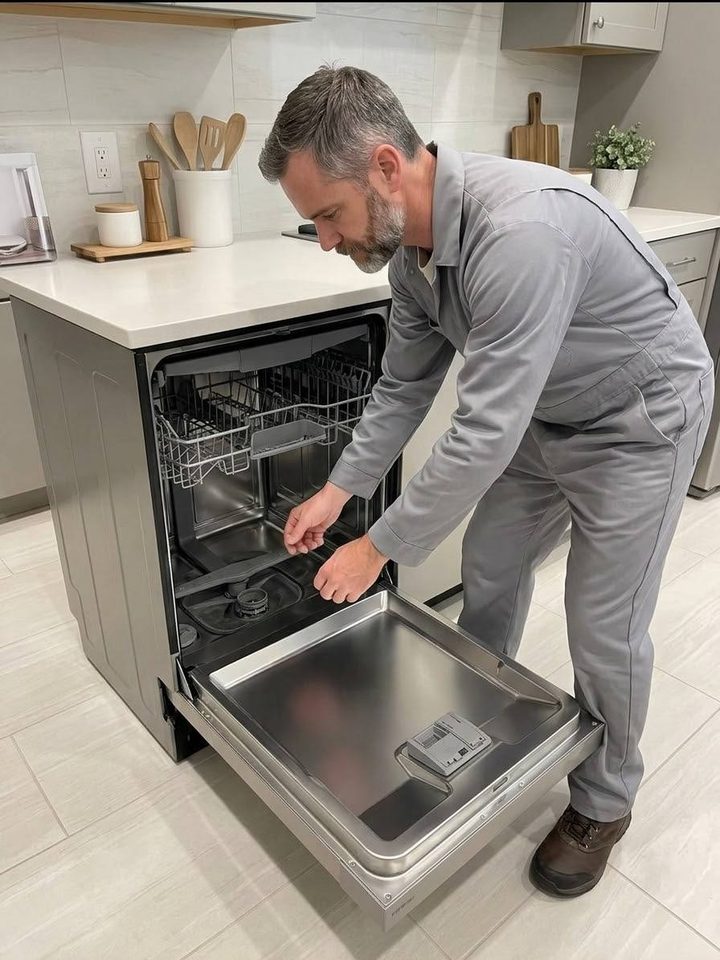
Dishwasher house calls start at $238 — examination plus all repair labor. Sump cleanouts and drain-loop corrections often close with no parts at all; pumps, valves, latches and elements appear as their own written line before installation. A machine failed by its plumbing gets a referral, not a parts bill.
Before any pump is condemned, the exam opens the sump and reads the machine's diet — glass, seeds, a plastic bread-tab wedged in the impeller. Debris mimics a dying pump almost perfectly, and clearing it is labor the from-price already owns. The pump that gets replaced here is the one that fails with a clean sump and a meter on its windings, not the one that merely sounded guilty.
A dishwasher fed lukewarm water washes badly and dries worse, and no part fixes a supply problem. The exam measures intake temperature before judging the machine — sometimes the honest prescription is running the kitchen tap hot before starting the cycle, which costs nothing and cures 'it stopped cleaning' more often than this trade admits.
East of town, mineral scale narrows spray-arm jets and stiffens inlet valves years ahead of schedule. The chart separates scale maintenance from mechanical failure because they bill very differently — a citric-acid service and a jet cleaning is not a repair, and we won't price it like one. Persistent hard-water trouble earns a filtration referral in writing.
A dishwasher that won't start at all usually isn't dead — it's refusing, because the door latch or its microswitch no longer convinces the control the door is shut. The part is modest, the swap is quick, and the diagnosis takes minutes with a meter. It's the dishwasher's version of the dryer's door switch, and it leads the won't-start differential by a wide margin.
A leaking tub weld or a failed sealed sump on a builder-grade machine can cost more to cure than the dishwasher cost new, and the $90 exam exists so we can say that plainly. The chart prices the repair, states the machine's realistic remaining life, and lets you decide with numbers instead of hope — and when you choose to replace, we'll say what to look for.
Phone or form: the machine, the complaint, the history. The van loads for the likely diagnosis before it leaves Wendell Ave.
Panels off, meter out, a full working cycle observed where the fault demands it. No part is named before it's measured.
Finding, prescription and price in writing: from-price for the visit and labor, any part as its own approved line.
Most repairs close the same visit from van stock. Warranty terms print on the invoice — paper, not promises.
From $238, which buys the examination and all repair labor. A prescribed part gets its own written line for your signature first. Stopping at the diagnosis costs $90 flat.
Both — built-ins are the daily bread, portables and drawer models book the same way. Panel-ready integrated units just deserve a mention at intake so the van packs for the cabinetry.
Usually it's a sump and filter overdue for cleaning, and the honest answer is maintenance, not parts. If the smell survives a proper cleanout, the exam looks at the drain loop — a low loop lets sink water wander back in.
Half the time it's debris in the sump or a kinked loop under the sink, not the pump at all. The exam settles it with the panels off and the meter out before any part is named — which is exactly why the labor lives in the from-price.
The home ward — the practice lives on Wendell Ave SE, minutes from most doors.
Across Sinclair Inlet; basement laundries and rental turnover keep rounds busy.
The far-north run — Liberty Bay damp, Viking-town kitchens, paired with Silverdale days.
No stock heroics — panels off, meter out, the day's patients on the bench. This is the work the from-price buys.
The intake is the first half of the diagnosis — the machine, the complaint and your ZIP decide what rides on the van. A weekday callback confirms your window.
The from-price covers the visit, the diagnosis and every hour of repair work. It's published before you call.
A needed part is written up separately and signed before it's fitted. Stop at the diagnosis instead and $90 is the whole bill.
Call (360) 717-8956 with the complaint — weekday windows fill quickly, and honest ones are the only kind we book.