A warming fridge is the one appliance emergency with groceries on the clock, so it takes the first appointment of the day. From $249 for the examination and the repair labor.
Refrigeration is where methodical medicine pays best, because the visible symptom sits three causal steps from the disease. Warm milk can mean a frost-buried evaporator, a dead circulation fan, a start relay flinching at its job, or — rarest and gravest — a sealed system losing its refrigerant. Each carries a different prognosis and a very different bill, and only the examination can tell them apart. The Doctor's structure keeps that exam honest: with labor already inside the from-price, the diagnosis owes nothing to the expensive possibility.
The most common admission in this clinic is the slow fade: a fridge that drifts warmer over one or two weeks while its freezer soldiers on. That pattern is the defrost system confessing — heater, thermostat or control failing to melt the evaporator's daily frost until the coil suffocates under its own ice. Caught during the whisper, it's a modest kit on a single parts line. Ignored until the shout, it costs a full grocery run on top. The moral the whole peninsula should hear: call during week one.
South Kitsap complicates refrigeration in its own ways. Garage second-fridges from Gorst to Manchester spend winters below the ambient temperatures their thermostats were designed to read, and every cold snap produces a wave of 'broken' units whose only disease is the weather. Chest freezers holding a season of salmon and venison turn any failure into a genuine emergency. And the salt air along Beach Drive furs condenser coils into insulation. The exam accounts for all three before any component is charged.
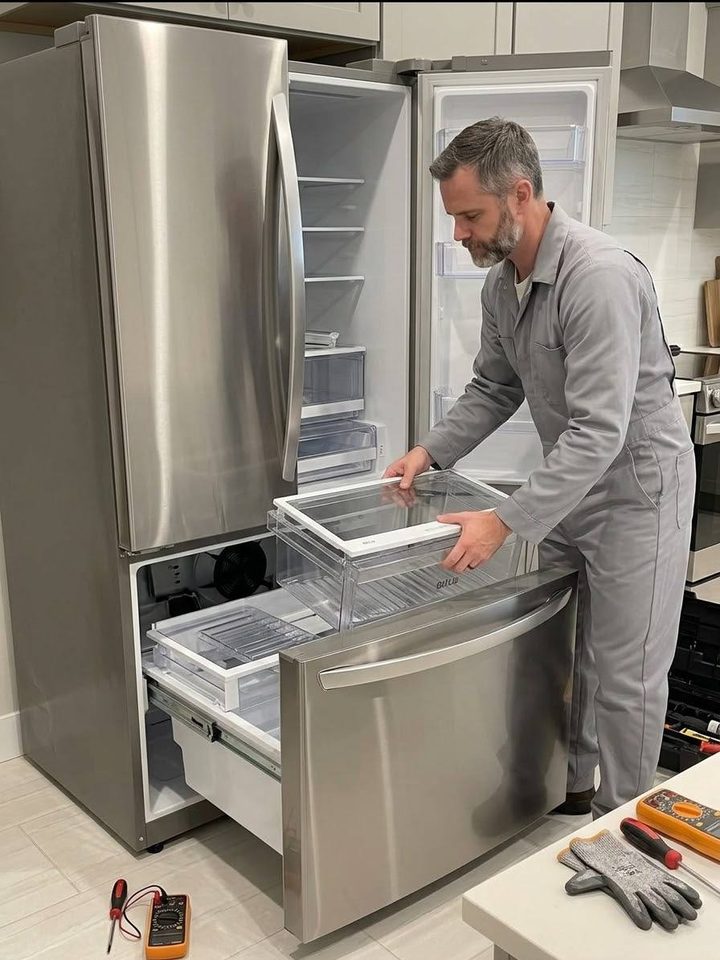
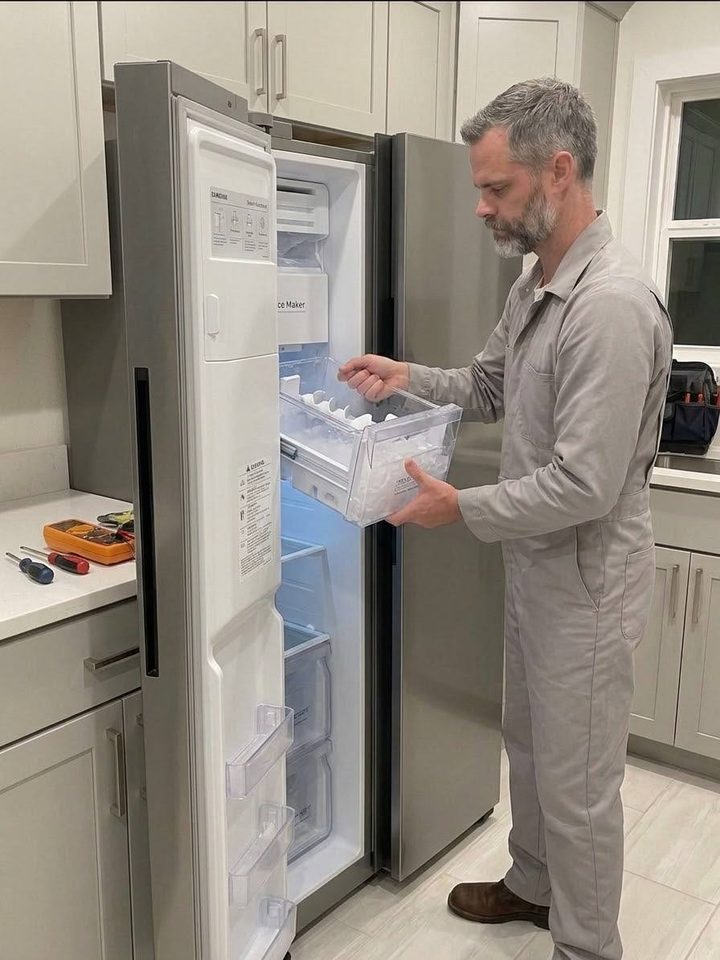
Cold-side house calls start at $249, exam and labor included. Defrost kits, fans, relays and gaskets are the routine prescriptions and price gently. Sealed-system verdicts get written honestly — and when the arithmetic says don't operate, the $90 close-out is the cheapest good advice in the county.
One evaporator makes cold for both compartments in most household units, and the freezer sits closest to it. When frost swallows the coil or the fan quits, the freezer keeps drawing from the source while the fridge upstairs starves on whatever trickles through. That loyalty pattern is diagnostic gold — it points at the defrost system before a single panel comes off, and the exam usually confirms it within the half hour.
That rhythmic click-hum-click behind the cabinet means the start relay keeps missing its cue to wake the compressor — and this chart carries the practice's most urgent prognosis. The relay itself prescribes cheap, but every misfire bruises the very organ it was hired to start, and a dead compressor is the one finding that totals a refrigerator. Booked promptly this is a small chart. Postponed a month, it can become a eulogy.
When the exam points inside the refrigerant loop — a compressor fading, a slow leak starving the coil — the chart says so in plain words with the arithmetic attached. On a young premium unit that surgery can pencil; on a builder-grade fridge past its first decade it almost never does. A meaningful share of our $90 visits end exactly there: a firm diagnosis, a candid no, and a customer who shops for a replacement knowing precisely why.
Unheated Kitsap garages sink below many refrigerators' rated operating range every winter, and a thermostat reading a 40-degree room simply stops calling for cold — the freezer thaws while nothing is broken. Part of every garage-unit exam is separating machine from environment. Sometimes the prescription is a heater kit; sometimes it's the honest sentence 'this fridge is fine and this garage is the problem,' which costs $90 and saves the price of a part the weather impersonated.
Between salmon seasons, deer camps and warehouse-store strategy, South Kitsap households bank more food in chest freezers than most of the country — and a silent freezer is a four-figure emergency wearing a $60 relay. Say 'freezer down, food inside' at intake and the appointment book bends. Keep the lid closed meanwhile; a loaded chest defends its contents for a day and more, which is nearly always enough.
Phone or form: the machine, the complaint, the history. The van loads for the likely diagnosis before it leaves Wendell Ave.
Panels off, meter out, a full working cycle observed where the fault demands it. No part is named before it's measured.
Finding, prescription and price in writing: from-price for the visit and labor, any part as its own approved line.
Most repairs close the same visit from van stock. Warranty terms print on the invoice — paper, not promises.
Cooling failures take the first appointments we have — commonly same or next business day across Port Orchard and the south end. Say 'not cooling' at intake and the schedule adjusts.
From $249, exam and labor included; parts are separate approved lines. Stopping at the diagnosis costs $90 flat.
Both, kitchen and outbuilding, including the harvest fleet. Same structure, same emergency priority when food is at stake.
For defrost parts, fans, relays and gaskets — frequently yes. For sealed-system disease — usually no, and the chart will say it without hedging so you can shop with facts.
The home ward — the practice lives on Wendell Ave SE, minutes from most doors.
Across Sinclair Inlet; basement laundries and rental turnover keep rounds busy.
The far-north run — Liberty Bay damp, Viking-town kitchens, paired with Silverdale days.
No stock heroics — panels off, meter out, the day's patients on the bench. This is the work the from-price buys.
The intake is the first half of the diagnosis — the machine, the complaint and your ZIP decide what rides on the van. A weekday callback confirms your window.
The from-price covers the visit, the diagnosis and every hour of repair work. It's published before you call.
A needed part is written up separately and signed before it's fitted. Stop at the diagnosis instead and $90 is the whole bill.
Call (360) 717-8956 with the complaint — weekday windows fill quickly, and honest ones are the only kind we book.