Cold loads, marathon cycles, mid-cycle collapses — dryer complaints have a short differential, and the Doctor works through it with a meter, not a hunch. From $217 for the exam and the treatment labor.
Dryer medicine in South Kitsap starts with an unfashionable organ: the exhaust duct. This peninsula's laundry goes in damp and its air stays wet most of the year, so lint doesn't tumble out of duct runs the way the manuals assume — it laminates into them. A remarkable share of the 'my dryer lost its heat' calls that reach our Wendell Ave practice turn out to be respiratory, not cardiac: the heating element is fine, and the machine simply can't exhale. That's why every heat complaint gets an airflow reading before any component is accused of anything.
When the fault is genuinely internal, the differential is tidy. Electric dryers fail through elements, thermal fuses and cycling thermostats; gas units through igniters, flame sensors and coil packs; both through drum rollers, idlers and belts that announce themselves with a squeal long before they quit. The examination walks that list in order of probability and stops at the first confirmed culprit — because the from-price already contains the labor, there is no financial reason to keep walking toward the expensive end.
Port Orchard adds its own case history. The older streets above the marina run dryers on circuits installed generations ago, and a heat-fatigued 240-volt receptacle imitates a dead machine with total conviction. On vintage housing the Doctor examines the wall as well as the appliance; when the house turns out to be the patient, the chart says so and refers you to the correct specialist — an electrician — rather than billing you for a part the dryer never needed.
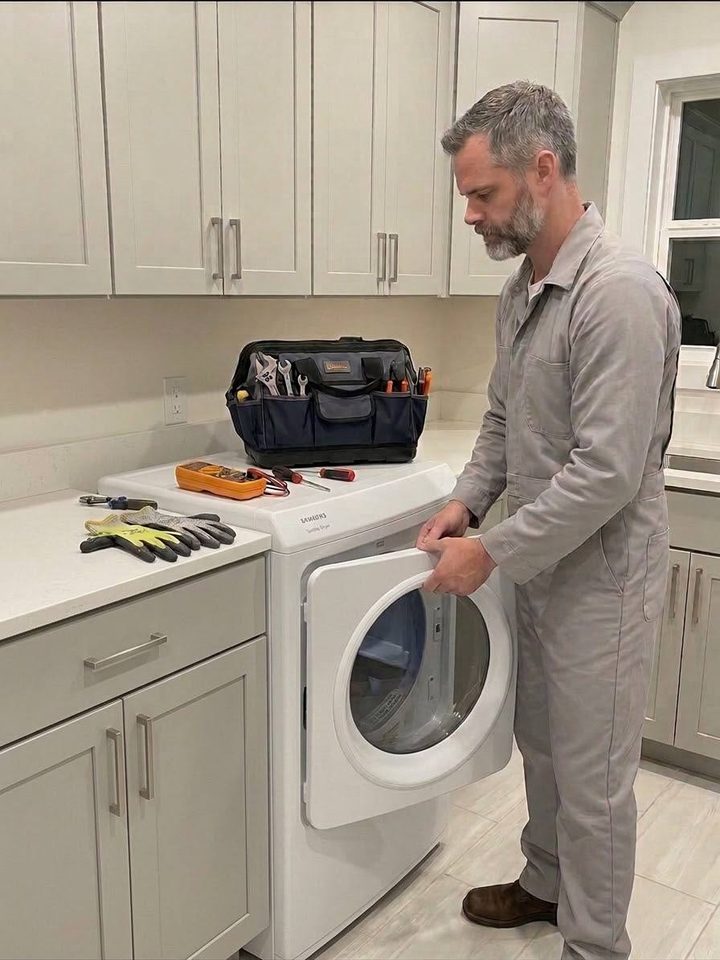
Dryer house calls start at $217 — examination plus all repair labor. Thermal fuses and thermostats prescribe cheap; elements, igniters and boards cost more and appear as their own written line before installation. A dryer cured by a cleared duct pays the from-price and nothing further.
Because it exonerates more parts than any other test we run. A duct that can't move air makes the safety thermostat cut a healthy element over and over — the symptom reads 'no heat,' the cause is 'no breath.' Two minutes with the machine running tells the truth, and when the verdict is airflow, your parts line stays empty and the visit closes at the from-price. The expensive misdiagnosis this test prevents is the most common one in the trade.
Igniter glows, valve coils open, burner lights — every gas dryer tells this story several times per load, and each chapter can fail on its own. A glow that never leads to flame points at the coils or the sensor; no glow at all indicts the igniter or its supply. All three are bench-ordinary repairs with modest parts lines, and the frequent ones ride on the van for the platforms South Kitsap actually owns.
Dryers of the last decade end cycles on sensor readings, and a sensor filmed over with softener residue reports 'dry' about towels that disagree. The prescription escalates honestly: clean the bars first, replace them second, suspect the board a distant third. Our pricing removes any temptation to reverse that order — the labor money is identical whichever rung turns out to be true.
Between Annapolis and the blocks above downtown, plenty of dryers younger than ten run on wiring older than fifty. Breaker trips, brownouts and no-starts sometimes belong to the receptacle rather than the machine, and our exam includes the wall on principle. House-side findings go in the chart with a referral to a licensed electrician — we treat appliances, and we know exactly where that license ends.
Most dryer prescriptions fill straight from van stock. For the rarer ones, visit one closes with the written chart — finding, part, price — and visit two fits it with no second labor charge. Roughly a third of all repairs in this trade need that return trip; ours are priced in from the start, so the paper you signed is the invoice you pay.
Phone or form: the machine, the complaint, the history. The van loads for the likely diagnosis before it leaves Wendell Ave.
Panels off, meter out, a full working cycle observed where the fault demands it. No part is named before it's measured.
Finding, prescription and price in writing: from-price for the visit and labor, any part as its own approved line.
Most repairs close the same visit from van stock. Warranty terms print on the invoice — paper, not promises.
From $217, which buys the examination and all repair labor. A prescribed part gets its own written line for your signature. Stopping at the diagnosis costs $90 flat.
Both, daily. Electric dominates South Kitsap; the gas minority gets the same from-price with slightly dearer typical parts, always itemized before fitting.
Genuinely either, and guessing is expensive. The exam meters both sides and the chart names the guilty one — with an electrician referral when it's the house.
When the duct is the diagnosis, clearing accessible runs is the treatment and lives inside the from-price. For pure maintenance cleanings, ask at booking — sometimes a duct specialist is the better referral, and we'll say so.
The home ward — the practice lives on Wendell Ave SE, minutes from most doors.
Across Sinclair Inlet; basement laundries and rental turnover keep rounds busy.
The far-north run — Liberty Bay damp, Viking-town kitchens, paired with Silverdale days.
No stock heroics — panels off, meter out, the day's patients on the bench. This is the work the from-price buys.
The intake is the first half of the diagnosis — the machine, the complaint and your ZIP decide what rides on the van. A weekday callback confirms your window.
The from-price covers the visit, the diagnosis and every hour of repair work. It's published before you call.
A needed part is written up separately and signed before it's fitted. Stop at the diagnosis instead and $90 is the whole bill.
Call (360) 717-8956 with the complaint — weekday windows fill quickly, and honest ones are the only kind we book.