Ovens that lie about their temperature, burners that boycott, gas that lights late — cooking complaints get measured, never guessed. From $281 for the exam and the repair labor.
Cooking appliances are where sloppy diagnosis costs patients the most, because the parts ladder is steep and the symptoms overlap almost perfectly. A $30 temperature sensor and a $300 control board misbehave nearly identically; a dead burner might be its element, its switch or its receptacle block. The only referee is measurement — resistance against spec, voltage at the element, cavity temperature across a full cycle — and the Doctor's pricing exists to protect the measuring. With labor settled inside the $281, no rung of the ladder pays better than the true one.
The practice's patient list spans every cooking generation South Kitsap owns. Above the marina and through Annapolis, ranges from the coil-top era keep working on parts that remain cheap and available — the most treatable cooking appliances ever made. McCormick Woods and the Bethel-corridor plats cook on glass-top electrics and the occasional induction unit, machines that fail less often but fail electronic. Between them sits every gas configuration from vintage standing pilots to hot-surface igniters with opinions about humidity.
One safety note belongs in every cooking chart: a burner that will not turn off, a breaker that trips at power-on, a gas smell that outlasts ignition — these are stop-now symptoms, not book-next-week ones. Kill the breaker or the valve and call. And where a fault crosses from the appliance into the house — supply piping, wall wiring — the chart names the licensed trade that inherits it. This practice knows its scope and writes referrals without ego.
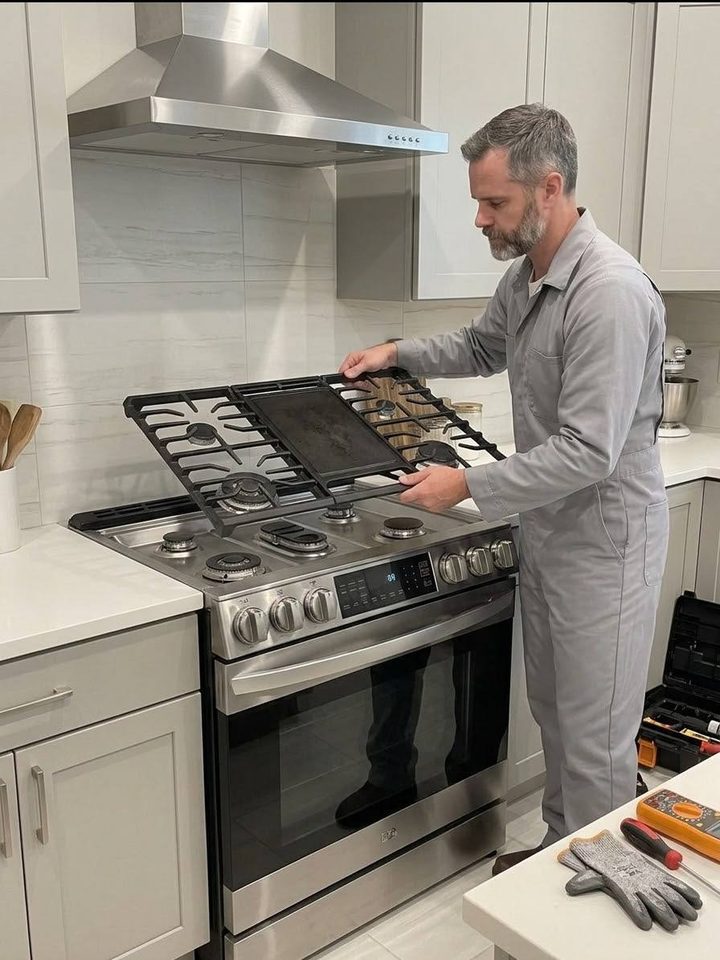
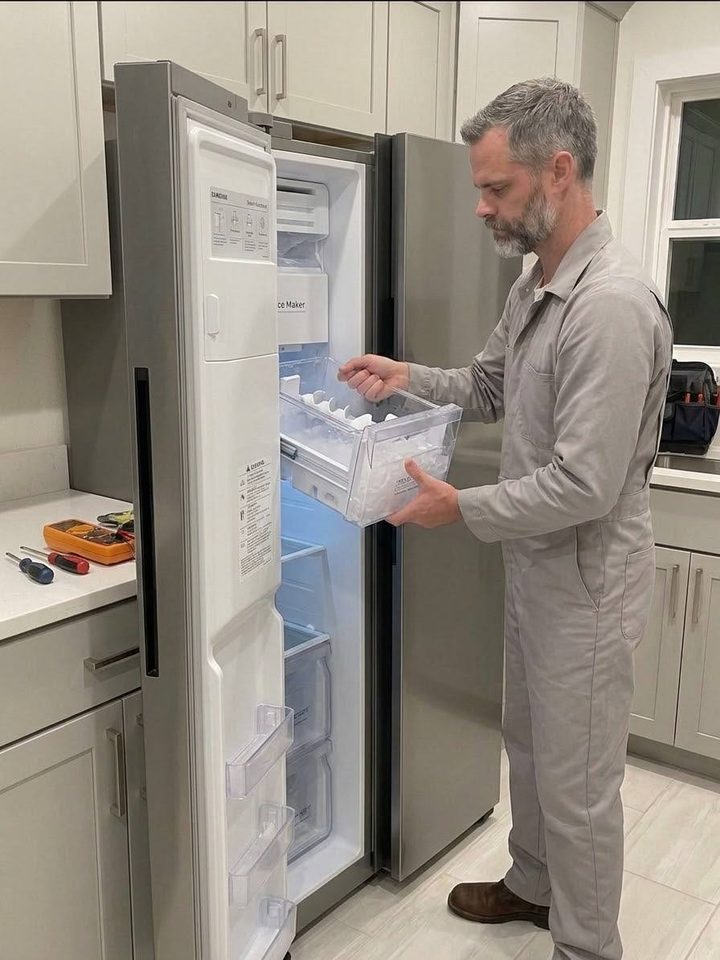
Cooking house calls start at $281 with the exam and all labor inside. Elements, igniters, switches and sensors prescribe modestly; boards and cooktop glass climb, always as written lines you approve first. The 'not worth operating' verdict costs $90 and comes with the reasoning on paper.
Supply, control, relay, element — oven heat crosses four links in sequence, and every link breaks in its own recognizable way. A blistered element convicts itself on sight; a cold element with healthy continuity throws suspicion upstream; dead-everything points at the wall. The exam works the chain in order because the links differ in price by a factor of ten, and prescribing the wrong one means the patient pays twice.
Hot-surface igniters weaken the way eyes do — gradually, while still appearing to work. Once its current draw sags under spec, the gas valve declines to open — so the oven lights late, cycles strangely, or gives up. It is the single most predictable gas-oven diagnosis, the vans stock it for the popular platforms, and fitting one sits comfortably inside a from-price visit. An oven that has grown superstitious about lighting almost always ends here.
Radiant elements beneath the glass replace individually at sensible cost. The glass itself is model-priced — occasionally fair, sometimes most of a new cooktop — and the chart quotes it straight so you can judge. One firm order: a crack over a live element zone retires that zone until it's assessed. Heat and fracture make poor colleagues, and no dinner is worth the experiment.
The self-clean cycle runs the cavity hundreds of degrees past any roast, and marginal components fail during or immediately after — fuses, latches, occasionally boards. The post-clean lockout is a monthly admission at this practice. Our standing counsel for any oven past warranty: use the feature rarely, never the week before you host, and consider a $10 tub of oven cleaner the safer anesthetic.
Remodeled kitchens from Manchester to McCormick split cooking across separate wall ovens and cooktops, and both belong to this practice. When each has its own complaint, say so at intake — examining both in one visit is the economical route, and the charts still arrive as separate papers so you can approve either, both, or neither.
Phone or form: the machine, the complaint, the history. The van loads for the likely diagnosis before it leaves Wendell Ave.
Panels off, meter out, a full working cycle observed where the fault demands it. No part is named before it's measured.
Finding, prescription and price in writing: from-price for the visit and labor, any part as its own approved line.
Most repairs close the same visit from van stock. Warranty terms print on the invoice — paper, not promises.
From $281 including the exam and all labor; parts are separate written lines. Stopping at the diagnosis closes at $90.
At the appliance level, yes — burners, igniters, valves and conversions checks. Supply-side and tank work belong to gas professionals, and the chart says so when that's where the fault lives.
Usually. Inner and outer door glass exists as service parts for mainstream models and the rebuild is standard bench work. Bring the model number to intake and the glass gets priced before the visit.
On an older oven, a momentary trace can be. A smell that lingers is another matter entirely: turn the oven off, air the room, and have your gas utility clear the house before any stove work happens.
The home ward — the practice lives on Wendell Ave SE, minutes from most doors.
Across Sinclair Inlet; basement laundries and rental turnover keep rounds busy.
The far-north run — Liberty Bay damp, Viking-town kitchens, paired with Silverdale days.
No stock heroics — panels off, meter out, the day's patients on the bench. This is the work the from-price buys.
The intake is the first half of the diagnosis — the machine, the complaint and your ZIP decide what rides on the van. A weekday callback confirms your window.
The from-price covers the visit, the diagnosis and every hour of repair work. It's published before you call.
A needed part is written up separately and signed before it's fitted. Stop at the diagnosis instead and $90 is the whole bill.
Call (360) 717-8956 with the complaint — weekday windows fill quickly, and honest ones are the only kind we book.