Empty bins, shrinking cubes, weekly icebergs — small organ, long dependency chain. From $252 for an examination that watches the whole cycle before naming any part.
The ice maker is a small assembly living on a long chain of dependencies — freezer climate, supply pressure, the inlet valve and its fill tube, the mold's thermostat, the harvest drive, the bin's sensor — let any one falter and the whole organ goes quietly idle. No code, no leak, just a bin that quietly stops refilling. Proper diagnosis means watching one entire make-and-harvest cycle with the covers removed, and that patience is already funded inside the $252: the Doctor watches the machine work, or fail to, before a single part is named.
Water history matters more here than with any other appliance. In-town Port Orchard's municipal supply treats ice makers gently until a filter overstays; the well country toward Olalla and the east lanes writes mineral scale onto valve screens on a nearly predictable calendar. Cloudy cubes, shrinking harvests and off tastes each point down different branches depending on the source — which is why the intake call asks about your water before anything else.
There's also a happy statistical truth this ward is honest about: a solid fraction of ice-maker admissions end with no parts at all. A shut-off arm nudged into retirement by a gallon of milk, a two-year-old filter, a freezer running warm for gasket reasons — these discharge at $90 with a written finding and a mildly embarrassed smile. The $252 exists for genuine organ failure; it never exists to inflate a $90 answer.
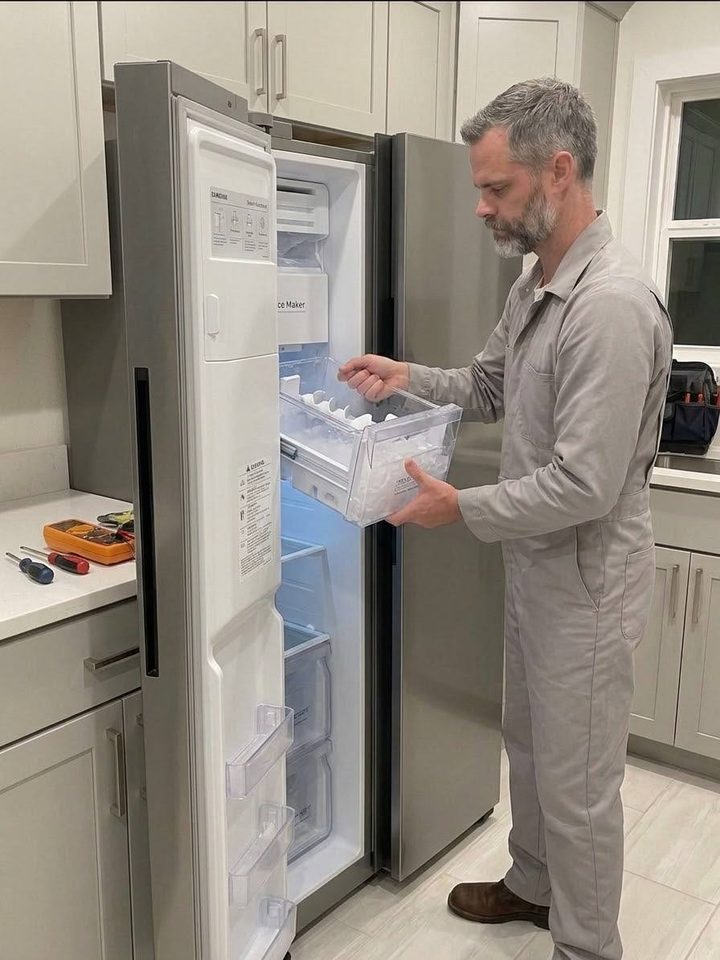
Ice house calls start at $252, exam and labor combined. Inlet valves and sensor arms prescribe at the light end; complete assemblies — often the durable surgery on modern units — sit mid-range as one clean written line. Standalone household machines join the practice at the same structure.
An ice maker that recovers after every manual defrost and fails again within the week is describing its own disease: a valve that weeps after closing, a trickle freezing in the tube, a plug that rebuilds on schedule. Thawing treats the symptom; replacing the weeping valve cures the patient, at one of the gentlest parts lines on the sheet. This single mechanism explains a startling share of the peninsula's ice complaints.
Ice-maker component pricing is strange: a harvest motor alone can approach the cost of the complete assembly that includes it, plus heater, thermostat and harness, all new under one warranty. Where that arithmetic holds, the chart shows both routes with both totals and recommends the assembly — not because it's larger, but because it's the surgery you won't repeat next season. Daylight math, your signature.
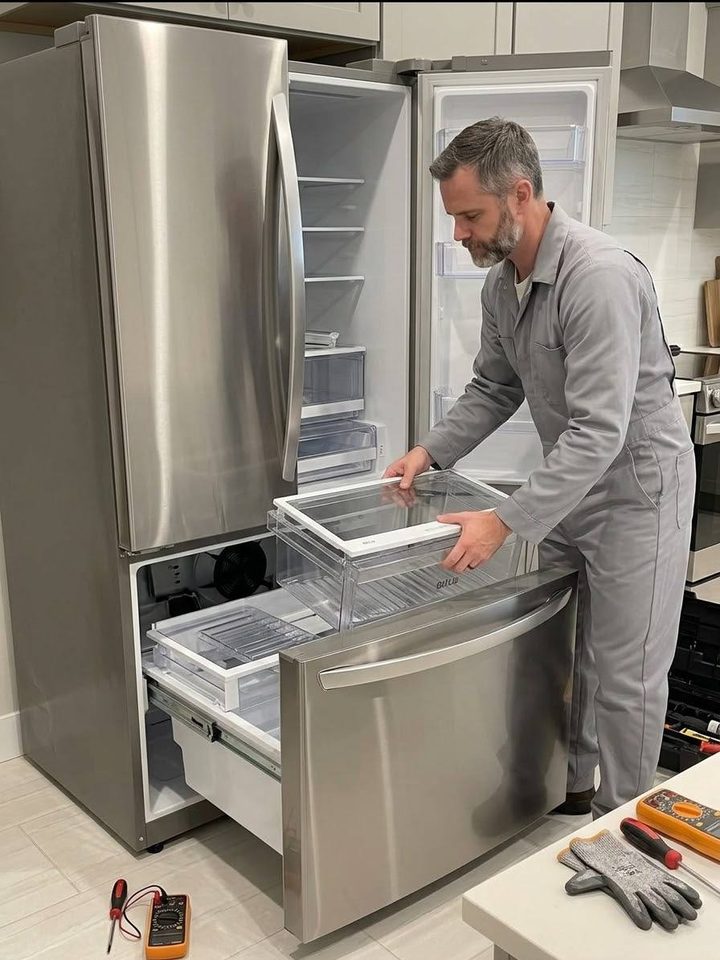
Door-ice French-door models chill a small compartment marooned in fresh-food warmth through a dedicated cold circuit — elegant engineering with slim tolerance for leaks or duct icing. Their faults skew toward the dedicated fan and air path rather than the classic mold problems. The volume platforms are weekly work here; the few boutique designs locked to factory service get identified at intake, free, before any fee exists.
Under-counter clear-cube and nugget makers are genuine refrigeration appliances with pumps and condensers of their own, and the household brands belong to this practice at standard pricing. A true commercial machine — the kind earning its keep in a café — belongs with a commercial refrigeration outfit running flush-cycle maintenance, and the practice says so at intake rather than experimenting on gear a livelihood rides on.
On well households the ice ward sees the same cycle for years: cubes cloud, production sags, the valve screen fills with scale, everything resets after a modest service — then repeats on a two-to-three-year rhythm set by your aquifer. That's not disease; it's a maintenance reality worth planning around. The chart tells you where your machine sits in the cycle and when the next preventive look is worth the visit.
Phone or form: the machine, the complaint, the history. The van loads for the likely diagnosis before it leaves Wendell Ave.
Panels off, meter out, a full working cycle observed where the fault demands it. No part is named before it's measured.
Finding, prescription and price in writing: from-price for the visit and labor, any part as its own approved line.
Most repairs close the same visit from van stock. Warranty terms print on the invoice — paper, not promises.
From $252 with the exam and labor inside; parts are separate written lines, assemblies quoted whole when that's the durable route. Many visits close at the $90 finding.
Entirely. The ice maker runs its own water and electrics and retires on its own schedule. It's a routine admission, not an omen about the fridge.
Colder household water and garage-adjacent freezers both slow the cycle seasonally. A modest winter sag can be physiology; a full stop is pathology, and the exam tells them apart.
If the fridge shipped ice-maker-ready and sound supply exists at the wall, yes — priced like any visit. Running new plumbing across a kitchen is a plumber's chapter first, and the chart will say so.
The home ward — the practice lives on Wendell Ave SE, minutes from most doors.
Across Sinclair Inlet; basement laundries and rental turnover keep rounds busy.
The far-north run — Liberty Bay damp, Viking-town kitchens, paired with Silverdale days.
No stock heroics — panels off, meter out, the day's patients on the bench. This is the work the from-price buys.
The intake is the first half of the diagnosis — the machine, the complaint and your ZIP decide what rides on the van. A weekday callback confirms your window.
The from-price covers the visit, the diagnosis and every hour of repair work. It's published before you call.
A needed part is written up separately and signed before it's fitted. Stop at the diagnosis instead and $90 is the whole bill.
Call (360) 717-8956 with the complaint — weekday windows fill quickly, and honest ones are the only kind we book.