Standing water, hostage laundry, spin cycles that shake pictures off walls — washer complaints arrive dramatic and leave boring. From $234 for the exam and every hour of treatment labor.
The washer is the appliance most likely to be misdiagnosed over the phone, because its dramatic symptoms map onto absurdly different price tags. A drum of standing water might be a coin in the impeller — recovered free during the exam — or a pump at the end of its bearings, or a control fault masquerading as either. Companies that quote such calls sight-unseen must price for the worst case; a practice that examines first can price for the actual case. That, in one sentence, is why the Doctor's from-price covers the exam and labor while parts wait for evidence.
South Kitsap's washer population splits along its housing lines. The established neighborhoods from Annapolis through the Bethel corridor keep top-loaders of the mechanically honest generation — machines whose pumps, couplers and lid switches cost little and forgive much. McCormick Woods and the newer plats run front-loaders with door locks, drain codes and suspension systems that reward a more electronic bedside manner. The van stocks for both demographics because a Tuesday here reliably includes both.
Water writes case notes too. Olalla and the rural east lanes pull from wells whose minerals narrow inlet valves and stiffen pressure hoses — slow fills and phantom level errors with nothing 'broken' in the catalog sense. In-town Port Orchard's municipal supply is gentler but not innocent: aging galvanized branches shed grit into the same valve screens from the other direction. The intake questions ask where your water comes from before the van door ever opens.
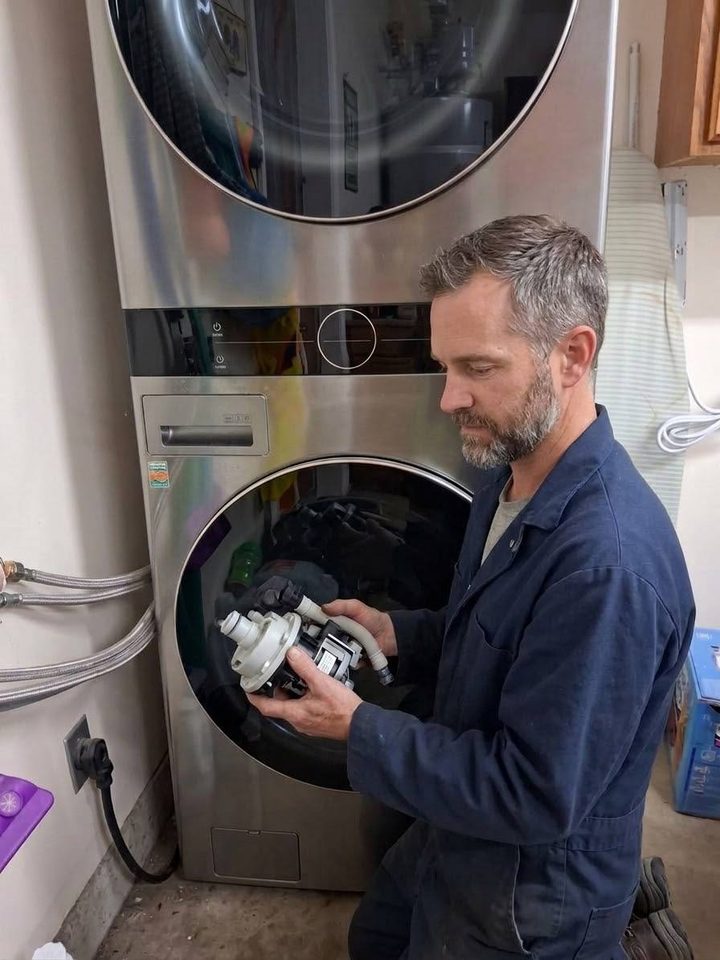
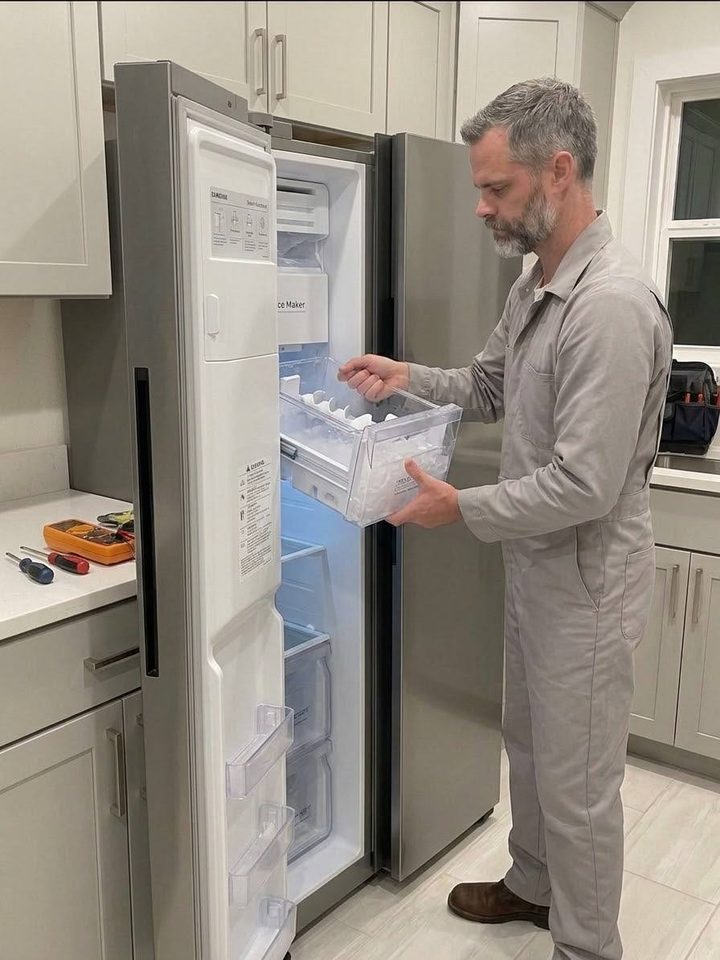
Washer house calls start at $234 with examination and labor combined. Pumps, locks, valves and belts prescribe modestly; suspension sets and electronics climb — each as a named written line you approve before it's fitted. No part needed? The from-price is the entire bill.
A front-loader guarding a drum of water refuses to open by design — forcing the handle is how a $40 problem adopts a $90 sibling. The Doctor drains through the service port, releases the lock the way its engineers intended, and only then determines whether the pump, the filter or the lock itself belongs on the chart. Three different prescriptions; one calm procedure; laundry discharged undamaged.
A drain code names a subsystem the way a fever names an infection — usefully, but nowhere near specifically enough to prescribe from. Behind one code sit a kinked hose, a clogged filter, a dead pump and a lying sensor, at four different prices. The exam confirms which one with measurements, which is why the parts line on our chart never has to be revised after the fact.
A spin that has crescendoed from hum to roar is drum bearings, and the treatable question is architectural: serviceable bearings justify surgery, bearings sealed into a one-piece outer tub usually don't — the 'part' is half a new washer. Ten minutes inside the cabinet says which design you own. When the honest chart reads 'replace the machine,' you've spent $90 to dodge a repair that deserved dodging, and the Doctor considers that a successful outcome.
The direct-drive top-loaders still working through the Bethel corridor's laundry rooms are among the most treatable machines ever built. Couplers, pumps and switches cost little, fail legibly, and fit inside a from-price visit with a light parts line. We keep these veterans alive without sentimentality — when one is genuinely done, the chart says so — but the retirement rate is far lower than the replacement industry suggests.
A steady share of leak and odor admissions end with lifestyle advice instead of parts: modern detergent is triple-strength compared to what most measuring habits assume, and oversudsing pushes water past seals that were never designed to hold foam. Half the dose, door ajar between loads, a hot maintenance cycle monthly. When that's the whole prescription, the visit closes at $90 and everyone's better off.
Phone or form: the machine, the complaint, the history. The van loads for the likely diagnosis before it leaves Wendell Ave.
Panels off, meter out, a full working cycle observed where the fault demands it. No part is named before it's measured.
Finding, prescription and price in writing: from-price for the visit and labor, any part as its own approved line.
Most repairs close the same visit from van stock. Warranty terms print on the invoice — paper, not promises.
From $234 for the exam and all labor; parts are separate written lines. Declining treatment after diagnosis closes the visit at $90.
Yes — closets, garages and second-floor laundries included. Flag the setup at booking so the right equipment rides along.
If it leaks, no — shut the valves and let it sit. South Kitsap crawl spaces conceal water damage until the repair bill grows a comma.
We prescribe and supply our own parts because the invoice warranties the part and labor together. Split sourcing splits the warranty, so we decline — politely, but consistently.
The home ward — the practice lives on Wendell Ave SE, minutes from most doors.
Across Sinclair Inlet; basement laundries and rental turnover keep rounds busy.
The far-north run — Liberty Bay damp, Viking-town kitchens, paired with Silverdale days.
No stock heroics — panels off, meter out, the day's patients on the bench. This is the work the from-price buys.
The intake is the first half of the diagnosis — the machine, the complaint and your ZIP decide what rides on the van. A weekday callback confirms your window.
The from-price covers the visit, the diagnosis and every hour of repair work. It's published before you call.
A needed part is written up separately and signed before it's fitted. Stop at the diagnosis instead and $90 is the whole bill.
Call (360) 717-8956 with the complaint — weekday windows fill quickly, and honest ones are the only kind we book.